What is 3D Strength Theory?

Updated: Sep 25
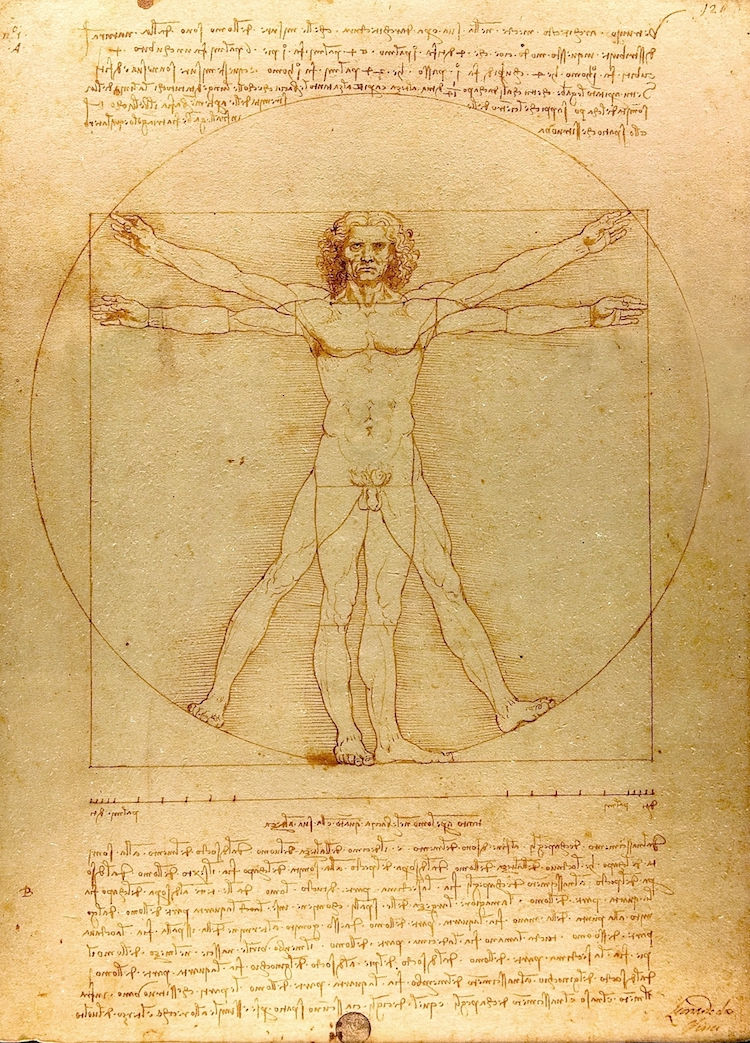
Most human movement takes place forwards and backwards. Technically, this is known as movement along the sagittal plane, however I'm going to call it 2D movement.
We walk, sit, stand, climb stairs, run, squat, push and pull in 2D. Many exercise programmes are dominated by 2D movements.
These activities still create small forces in every direction, but they do not usually develop much spare strength outside their main 2D direction of travel (forwards and backwards). If people understood the importance of 3D strength, I think it would dramatically reduce the number of people who need to come in see me in physio clinic for lower back pain, hip pain, knee pain, neck pain, shoulder pain and upper back pain.
Ball & Socket Joints
The shoulder & the hip are both ball and socket joints.
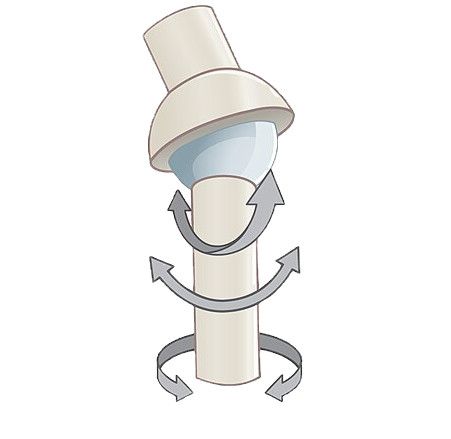
A ball-and-socket joint allows movement in almost every direction. This gives the hip and shoulder enormous freedom. But free joint movement without muscle control is a problem. Without muscle control, the ball will not move smoothly in the joint. The ball must be guided within the socket while the leg or arm moves around it. For this control, we need our 3D muscles.
What are the 3D muscles?
At the shoulder, it is our rotator cuff muscles (Rathi et al., 2016) which keep the ball gliding smoothly in the socket.
At the hip, it is our smaller gluteal muscles (medius and minimus) (Lim et al., 2024), deep hip rotators (Meinders et al., 2022) and gluteus maximus (Powers, 2010) that help keep the ball centred and controlled within the socket.

Use It or Lose It
If we don't move in 3D, we lose our 3D muscle strength over time. I have come to believe that it is a loss of this 3D strength that causes many of the aches and pains I see in clinic. Specifically: I think 3D hip muscle weakness is the root cause of many sore hips, lower backs and knees. I think 3D shoulder muscle weakness is the root cause of many sore shoulders, necks and upper backs.
Why are necks, backs and knees affected?
Because the hip and shoulder are the junctions between the trunk and the limbs. If load is not being managed well at one of these junctions, the effects can be felt above it or below it.
Why are strong people affected?
People who are 2D strong are often still 3D weak. I see many people who go to the gym regularly and have very high 2D strength, but they have pain and 3D muscle weakness.
Why is it usually one side that is affected?
I think this comes down to three reasons: 1) Historic Injury Often when taking someone’s history, people tell me they had a historic injury affecting the now painful side.
Following injury, the nervous system can automatically adapt the way we move in an attempt to protect the affected area (Hodges & Tucker, 2011). We may shift load away from it, stiffen the area or change which muscles we use, without consciously deciding to do so.
Sometimes these changes persist long after the original injury, even following common injuries like ankle sprains (Tajdini et al., 2022)
Because the adjustment is subconscious, people often keep doing this years after the historic injury has resolved without realising.
2) Double Limb Loading Many strength exercises are performed with both limbs at the same time.
During squats, deadlifts, bridges, presses and rows; the task is judged by whether the combined system can move the weight. The stronger side can quietly contribute more while small shifts of the trunk, pelvis or shoulder girdle conceal the difference.
Walking technically involves loading one leg at a time, but it may not provide enough resistance to develop much spare capacity. A person can also take thousands of steps while consistently favouring one side.
The weaker side gets progressively weaker over time. Use it or lose it again.
3) Limb Dominance Just like people have a right or left hand preference, healthy people are often a little stronger in some of their arm and leg movements on one side of the body (Bradley & Pierpoint, 2023; Lanshammar & Ribom, 2011).
The issues arise when the strength difference between left and right 3D muscles strength becomes too big.
Is 3D muscle theory scientifically proven?
Short answer, no.
This idea is based on patterns I have noticed working in clinic.
Addressing 3D muscle weakness seems to help many people with troublesome necks, shoulders, backs, hips and knees.
It also seems to make sense.
Whilst it is by no means 'scientifically proven', there is some exisiting research that hints this theory has legs (pardon the pun). You can read more about the research here - 33 Studies Supporting 3D Strength Theory You can see my recommended 3D exercises for the neck and shoulder here - My Favourite 3D Strength Exercises for the Shoulder (& Neck) The next blog will explore what I would argue are the best 3D muscle exercises for the hip. If you're interested and would like a to be notified when they are posted, you can subscribe to the blog for free by scrolling to the bottom of the blogs page of the website and entering your email address. Thank you for reading! If you have any questions, please don't hesitate to comment below!
References
Bradley, H., & Pierpoint, L. (2023). Normative Values of Isometric Shoulder Strength Among Healthy Adults. International journal of sports physical therapy, 18(4), 977–988. https://doi.org/10.26603/001c.83938 Hodges, P. W., & Tucker, K. (2011). Moving differently in pain: a new theory to explain the adaptation to pain. Pain, 152(3 Suppl), S90–S98. https://doi.org/10.1016/j.pain.2010.10.020
Lanshammar, K., & Ribom, E. L. (2011). Differences in muscle strength in dominant and non-dominant leg in females aged 20-39 years--a population-based study. Physical therapy in sport : official journal of the Association of Chartered Physiotherapists in Sports Medicine, 12(2), 76–79. https://doi.org/10.1016/j.ptsp.2010.10.004 Lim, D. P., Lazaro, L. E., Kyhos, J. F., Chau, M. M., Ladnier, K. J., Nelson, T. J., Eberlein, S. A., Banffy, M. B., & Metzger, M. F. (2024). Contributions of the Abductor Muscles to Rotational and Distractive Stability of the Hip in a Biomechanical Cadaveric Model. Orthopaedic journal of sports medicine, 12(3), 23259671241231984. https://doi.org/10.1177/23259671241231984 Meinders, E., Pizzolato, C., Gonçalves, B., Lloyd, D. G., Saxby, D. J., & Diamond, L. E. (2022). Activation of the deep hip muscles can change the direction of loading at the hip. Journal of biomechanics, 135, 111019. https://doi.org/10.1016/j.jbiomech.2022.111019 Powers C. M. (2010). The influence of abnormal hip mechanics on knee injury: a biomechanical perspective. The Journal of orthopaedic and sports physical therapy, 40(2), 42–51. https://doi.org/10.2519/jospt.2010.3337 Rathi, S., Taylor, N. F., & Green, R. A. (2016). The effect of in vivo rotator cuff muscle contraction on glenohumeral joint translation: An ultrasonographic and electromyographic study. Journal of biomechanics, 49(16), 3840–3847. https://doi.org/10.1016/j.jbiomech.2016.10.014 Tajdini, H., Mantashloo, Z., Thomas, A. C., Letafatkar, A., & Rossettini, G. (2022). Inter-limb asymmetry of kinetic and electromyographic during walking in patients with chronic ankle instability. Scientific reports, 12(1), 3928. https://doi.org/10.1038/s41598-022-07975-x


Comments